What We Want? An Apology? Or Action & Accountability?

Update: TAG have received a video shot inside Long Valley on the 20th of April. The gates were locked but all evidence suggests one vehicle has used the outer test track all week, and very little activity of any sort had taken place. The video is added below.

In case anyone has missed the news, there are some elections coming soon. May the 2nd sees local elections, and a general election is just around the corner.

And in case anyone has missed it, DIO civil servants [sic] have been unable or unwilling to follow a direct instruction from an elected politician and Minister of State.

So it could be a good time to focus the minds of whoever might like to be our next councillor or MP perhaps? By asking those who seek to represent us a few probing questions about how casual recreational access to the military lands can be enhanced, and how DIO can be held to account for their behaviour, we can cast our votes wisely and endorse those who support enhanced recreational access.

One thing TAG won’t do is endorse a politician or party. Preserving and enhancing recreational access to all the military lands when not in use for training should and will remain strictly apolitical as far as TAG is concerned. The benefits to the local community for mental and physical well-being and health are both broad and deep and everyone should be embracing and supporting access.

But TAG will raise concerns and issues when our local politicians and Ministers are not applying accountability. And in this regard we find we are not alone.

Horizon Scandal

The issues, deceit and downright lies being exposed by the Post Office scandal, and the utter pain and suffering inflicted on sub-postmasters is abhorrent. Any decent democracy should, rightly, outraged.

Without in any way pre-judging the outcome of the inquiry, there is a repeating theme; a persistent and consistent failure by Ministers to question or challenge what civil servants told them. Its telling it took a TV drama to pull the issue into sharp political focus.

“I’m sorry I did not see through the Post Office’s lies”

Ed Davy – Minister responsible for the Post Office 2010~2012

Whilst welcomed, sorry will count for nothing if you went to prison, were hounded out of your community, or declared bankrupt, will it?

Paula Vennels, former CEO of the Post Office is somewhat belatedly being investigated for misleading Parliament over the failings of Horizon. Well, yes…very good…but TAG asks why does it take a TV drama to trigger politicians to challenge civil servants?

Why indeed?

In the past we might have laughed at the script of BBC Yes Minister series as the civil servants ran rings around their political bosses. Watching the series now leaves a dirty taste in one’s mouth as it reflects more like a documentary of how failure by weak and ineffective politicians has lead us directly to the Horizon scandal and a very real issue of zero accountability. The lack of trust and accountability persists and the rot stinks. Yet here we are, being treated with contempt by DIO. The comedy is gone and any politician who thinks it’s acceptable or funny is part of the problem, not a solution.

The inquiry has heard evidence from then Post Office CEO Alan Cook, who claims he didn’t know what was going on. The man who was in charge of the Post Office at the height of this scandal was unaware his own organisation had the power of prosecution. TAG will not prejudge the inquiry findings…but this evidence…is challenging. And TAG have already seen collective and individual DIO staff memory failure trumping written evidence.

Trust in leadership and the civil service is being undermined by such admissions and claims. It gets really hammered when folks like former CEO David Smith record “Brilliant news. Well done,” when hearing the news a pregnant sub-postmistress went to jail. At the inquiry Mr Smith went on to issue an apology, but this was not accepted.

The impact on the sub-postmasters has all the hallmarks of criminal behaviour. TAG applauds and respects their tenacity and dogged pursuit of the truth. And “sorry” won’t bring back their losses, on so many levels.

Accountability and DIO

On a different scale, we have DIO civil servants [sic] running around doing their own thing. Ministerial direction to keep Long Valley open has been ignored at will and DIO chose to delete the evidence recording minimal use.

Surrey residents are treated to a board carrying far more information. Contrast this to the message delivered to the community using the Aldershot Lands.

The lack of accountability goes beyond locked gates and into the areas of powers arrest and loss of liberty, refusing to apply the law of the land and treating FOI requests with contempt and logging false incident reports that suit their narrative.

In due course the issue of TSMs and powers of arrest will receive its own detailed blog. So will matters around false incident logging. The matter of arrest is serious; the Serious and Organised Crime Act of 2005 revoked powers of arrest by authorised persons, yet in 2020 a TSM made it clear “I can arrest you” because thinking that legal insight of “I have read the byelaws” was good enough.

The Surrey message is “Enjoy the lands responsibly”. The Aldershot message is “Go away and don’t come back” and this DANGER sign at Long Valley has been proved to tell lies far more than the truth.

Some of the worst “evidence” presented by DIO came out when Ash Ranges was closed. Photos purporting to show vandalism and justify fencing recorded damage miles away from the excluded area. DIO even helped themselves to a local’s photos that “proved” damage, breaching copyright and once again ignoring the law of the land.

TAG and the Ash Ranges campaign group Save Our Spaces started to compile a list of DIO false or deliberately misleading statements and you can download it here:

It does not make good reading when you take into account civil servants are duty bound by the Seven Principles of Public Life.

What is not clear is the root cause of this behaviour. Is it malicious? Do DIO simply hate civvies and casual access? Or is it just pure and simple incompetence? With the arbitrary locking of gates at Long Valley and Porridge Pots, in support of civilian events or when empty, it could be as simple as being spiteful? TAG are not qualified to assess this in fine detail, but a PhD is waiting for someone and there is a gap in knowledge needing to be filled here.

The British Journal of Sociology have recognised a weakness in the study of incompetence and the recent paper highlights the gaps in our understanding. The FT agrees and thinks a closer look at the issues of incompetence is overdue. If asked TAG would be more than willing to suggest a case study or two from what can only be described as a target-rich environment.

Like the Post Office, left alone DIO can and will carry on unchecked and accountability from the politicians is, based on how Long Valley remains locked and unused, notable by its complete absence.
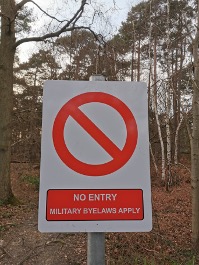
A sign at Porridge Pots. Message is not based on law or what the politicians say. Nothing stops DIO pushing misinformation.

You might think local politicians realise the community cares, but TAG do wonder if the message has really got through?

Even after publication of the 2020 survey its a struggle to get politicians to accept people care about recreational access:

Clearly 11,000 respondents and over 8,000 personal statements do not count for much. If you responded then TAG are grateful, but we fear your voice has been and remains completely ignored while the politicians remain tuned into DIO civil servants [sic].

Why It Matters

The truth matters. It’s a simple as that. But the issues go much deeper.

When an organisation or body loses its credibility and trust, a void forms. Something or someone will step in and fill it, and this some very negative outcomes. Every time a civil servant tells a lie or suppresses the truth, and they doesn’t face accountability they think they have got away with it.

But as the Horizon scandal shows, the truth can and will leak out, or be uncovered. Authority and trust are fragile and once damaged takes years to recover.

20th April 2024. Gates locked and all the evidence points to no military training and just one vehicle using the outer test track all week. This does not meet the Ministerial directive to keep the area open.

“Truth will ultimately prevail where there is pains to bring it to light.”

George Washington

Even when DIO civil servants [sic] are prepared to spend upwards of a half million quid in an advertising campaign trying to convince us that all the Aldershot lands are ranges. In the case of Long Valley and much of the dry training areas, its not a range and the DANGER signs were abused from the very first day of use, covering a commercial civilian event while pushing a message of military training.

Open lies like this simply demonstrate how egregious DIO attitude and approach to the local community has become. Do civil servants [sic] really think we are that stupid?

Bottom line; a post-event sorry for loss of casual recreational use of the lands will not restore the lost access. DIO need to be held accountable now.

What Can You Do?

Like we said, TAG will not endorse a politician or party. And we recognise we are a long way from the scale of the Horizon scandal. Yet just like the Post Office staff DIO are pulling the wool over politicians eyes and remain unaccountable. We can learn a sound lesson from the Post Office method of mistake and arrogance management and make sure DIO stop and change.

TAG suggests everyone asks if their representatives are delivering accountability and outcomes that benefit the community:

  • How could DIO be allowed to fence off Ash Ranges when the evidence to close them was so weak?
  • Why can a Minister issue a direction to keep Long Valley open, and DIO simply ignore it?
  • Why are DIO deleting the best available evidence of booking on and off records?
  • Where are the additional gates at Long Valley and why have DIO not installed them?
  • Why are the gates at Porridge Pots (G2) locked and the space empty?
  • How much money has been wasted on unnecessary fencing?
  • How much time and money do DIO spend on refusing legitimate FOI requests?
  • Why are DIO permitted to ignore the Seven Principles of Public Life?
  • Why did DIO remove many of the car parks and block access?
  • What are YOU (MP) going to do about DIO?
  • How can we objectively measure any claims of success in managing DIO accountability?
  • Why does this government find holding civil servants, and specifically those employed at DIO, to account so difficult?

Should any politician suggest they have been working hard on the issue just ask this:

How can we objectively measure the outcome of your claims of success in holding DIO to account or making a difference and preserving casual recreational access?

As ever, the easiest way to communicate to your MP is via the Write to Them website.

Because only positive change and outcomes, such as the extra gates at Long Valley and DIO meeting the Ministerial instruction to keep it open, really matter. Everything else is just noise. So far, on both points, nothing has changed and DIO have been left unchecked to carry on regardless. This cannot be described as a positive outcome.

Remember, the option to do nothing is always a choice.

But DIO thrive on apathy and are emboldened by a disengaged community. Left to their own devices all the mood music points towards to increasing hostility from DIO towards the locals and casual recreational access.

The same is true for politicians. If the subject of DIO, their behaviour, the lack of evidence based policy and irrational restrictions on casual recreational access are not raised, nothing will change.

Do nothing and we can expect more restrictive and irrational policies from DIO.

So what is the lesson from the Post Office scandal? What can politicians and the community learn from it?

It’s really simple;

  • Do not automatically assume DIO are telling the truth.
  • Do not assume DIO are following accepted and recognised standards.
  • Do not assume DIO are applying evidence to shape policy.
  • Do not assume DIO are acting in anything but their own self-interest.
  • Seek evidence.
  • Examine DIO claims and assertions in detail.
  • Seek the truth.
  • Question everything.

“It is always the best policy to speak the truth, unless, of course, you are an exceptionally good liar.”

Jerome K. Jerome

Demand and expect evidence. Seek the truth. Expect and require a duty of candour. Expect DIO staff to fulfil their contractual obligations and uphold the Seven Principles of Public Life. Remind them there are no exclusions or opt-out clauses.

Then it’s just possible we will avoid hearing another political or civil service [sic] apology for a failure to diligently apply accountability in the future.
Did You Know – Ancient Trees?

On the Aldershot lands we are often surrounded by trees. But do we really give them a second glance? There is a project to map ancient and notable trees and it needs your help in identifying where these old growth specimens are. TAG have done the easiest and most obvious, but there will be others known locally but otherwise unrecorded, and this needs to change.

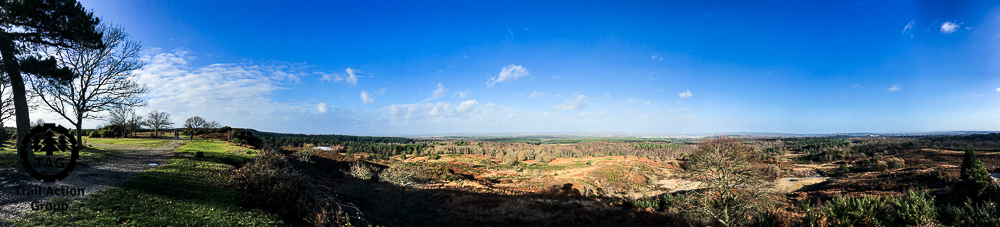
One of the most popular spots is the top of Caesars Camp. With far reaching views Farnborough airfield, the town of Aldershot, Ash Ranges and beyond to Guildford Cathedral are all visible.

On really clear days the City of London and Canary Wharf are on the horizon, along with the Wembley Arches.

It’s a stunning view from Jubilee Clump and on a clear day the City of London and Canary Wharf can be seen. The notable pine is at the far left of this panoramic photo

It’s a popular spot and the view has featured more than once in TAG’s picture of the week. We all spend time up there looking out across the lands to the distance.

And yet there is something very special at our backs. Alongside the new Parachute Regiment bench grows a notable pine tree. TAG would wager the tree is rarely the subject of a photo (but at least one talented photographer would disagree) and close up its overlooked as the view steals the limelight and attention, but its part of the landscape and thanks to sitting right at the end of the promontory and fort, is a landmark that can be seen for miles.

This tree is literally part of the landscape. And it’s been there a very long time. Now the tree has been added to the Woodland Trust’s Ancient Tree Inventory recording its presence as a notable tree.

Ancient Trees

Trees can live for hundreds of years, and a few species can live longer. Some species such as oak, yew and sweet chestnut reach 1000+ years, whereas birch and willow can be ancient at a mere 150 years old.

The category is defined in far more detail here, but suffice to say trees of this nature are truly special and real survivors.

Veterans

All ancient trees are veterans, but not all veterans old enough to qualify for ancient grading. These are the trees that might be thought of as middle aged and have some features found in ancients, but are still very important.

Notable Trees

These trees are mature examples that simply stand out in the local environment. Our pine tree at the top of Caesars Camp is a classic example and significance to the local community. They are, in simple terms, special.

Jubilee Clump

TAG believe the pine was planted to mark one of Queen Victoria’s jubilees, either the golden at 50 years, or the diamond at 60. So far we can find reference to this landmark on:

So its persisted as a place name for a very long time. Nowadays the OS map excludes the place name on its Landranger series (at time of writing) but the open data layer records the name Jubilee Clump.

Winter snow and a stunning view. The Veteran Pine is just to the right of the photographer’s shadow.

The pine is certainly old and if planted for the Golden Jubilee then its been there since 1887, making it 137 years old. It’s not been graded as ancient but is listed as notable on the Ancient Tree Inventory website.

But all of this is based on word-of-mouth history. Is Jubilee Clump really named so because of an association with a royal jubilee for Queen Victoria?

If anyone really knows do please get in touch.

What Can You Do?

Do you know of other remarkable trees on the military lands? There are just two others recorded at Caesars Camp on the Ancient Tree Inventory website but are there more hiding in plain sight?

It will be local knowledge that is relied on to see these trees identified and recorded, so if you know of a potential candidate why not submit its details to the Woodland Trust? The details needed are very straightforward and there is a simple guide here.

The Aldershot lands are a perfect place to reset the mind, body and spirit.

So next time you are out and about give your visit a purpose and look for these trees and if you find one, record it? Even if recording isn’t for you, just be on the lands and drink in the sheer beauty, diversity and value the place offers. Always give way to troops and remember the TAG code of conduct.

As a footnote and a request, why not carry a bag and fill it with litter? On one short walk we filled two bags – one rubbish and one recycling – in no time close to a car park.

Did You Know – Doing It Right?

TAG wish to see a better informed and engaged community using the lands. We recognise the massive value and benefits to physical and mental health it brings. Our community is a nicer place to live because of the access we enjoy and its our responsibility to treat the training areas with respect and the TAG code of conduct is aimed squarely at that outcome.

“The campaign was called ‘Respect the Range’ and was framed around reciprocation [TAG emphasis] of respect between the army and the public, acknowledging each’s need and desire to use the land.”

Respect The Range Requirements – Background to your Requirement 1.8

The Respect The Range campaign had good intentions but the messaging was far too simplistic. Specifically, for the Aldershot areas the shared content was off-message.

Continue reading

Nothing To See Part II

There is a scene in the classic film Apocalypse Now TAG feel drawn to.

The lead character, Captain Willard, has met his nemesis Colonel Kurtz. Kurtz was out of control running a renegade army deep in the jungles of Cambodia and conducting a war on his own terms. The conversation goes like this:

Kurtz: “Are my methods unsound?”

Willard: “I don’t see any method at all, sir”

A rather bloated and rambling Marlon Brando played Kurtz. TAG wonder if DIO are using the film and character as a guide to public engagement with cyclists? The Standards of Public Office are clearly defined yet when it comes to cyclists DIO appear to pay them only lip service and the Ombudsman finds no fault despite the evidence TAG has supplied.

TAG see a selective and discriminatory approach to recreational user groups with some are given the red carpet treatment and VIP access whilst cyclists are at best treated as a social leper. Here’s a good example from the government website covering access to the training estate:

We welcome external groups such as ramblers and horse societies to contact our access forum and make agreed arrangements about access in advance of any activity taking place. More information can be found on our Access Forum.

Here’s a list of the known user groups DIO recognise in some form or other, and how their otherwise illegal activities prohibited under the byelaws are permitted:

Group or PracticeForbidden ByEnabled By
EquestriansSection 4(2) – ride a horseSection 8(3) DIO authorised permit
Commercial Dog WalkersSection 4(3) – engage in trade or businessSection 8(3) DIO authorised permit
Ramblers Section 4(5) – Assemble and walk as a groupSection 8(3) written permission

The first two – horse riding and walking dogs for money – operate on a commercial basis. This is not something TAG would wish to see applied to casual recreation. TAG firmly believes the beneficial mental and physical health benefits for individuals and society at large far outweigh any fee DIO might earn.

But the Ramblers are a different kettle of fish as there is no commercial agreement and there is very good reasons to think DIO are applying discrimination and have as yet been unable to provide TAG with their justification.

But first, lets have a look at how the Ramblers got where they are and what service they receive today from DIO.

Red Carpet for Ramblers

The earliest record of the Ramblers engagement with DIO is the Ramblers own website. Back in 2014, at the same time as the now infamous Crookham Parish Hall meeting (where DIO announced cycling bans were in force) the Ramblers were also seen as troublemakers and were being stopped by DIO staff for walking in a group.

Yes, thats right. For the crime of walking in a group.

The Ramblers – just like cyclists – pushed back and didn’t back down. The outcome was written authorisation signed by Mark Ludlow agreeing that Ramblers could indeed walk en masse and not be bothered by DIO staff unless there was military training going on.

You can read the document for yourself here:

Contrast this to how cyclists were graded just one step above dog mess with the mantra “cycling is against the byelaws” repeated at every opportunity.

A proper DIO welcome for cyclists – there is a belief within DIO this is acceptable

Why didn’t cyclists get the same treatment?

We think there are two primary reasons.

Firstly, the Ramblers are better organised and their national body is not only vocal but is prepared to challenge and are able to draw upon legal advice to pressure DIO. Note how the liability for any deviation from the planned route is gently pushed onto DIO – the legal implications are clear and it’s a smart move, moving the risk of DIO instructions back onto DIO.

Secondly, TAG firmly believes there is a negative bias against cycling and cyclists at work in DIO.

Lacking any evidence to suggest cycling must be banned, whilst granting the Ramblers rights under Section 8(3) (written permission) suggests individual and collective bias is setting public policy.

Otherwise, cyclists would be treated equally or presented with compelling evidence to justify DIO’s actions. The absence of evidence and bias towards others sends a clear signal.

Or does it?

When you consider the results from the TAG 2020 Byelaws survey we know 42% of the 11,000 respondents identified cycling as an activity yet only 160 equestrian permits were issued over a two year period.

The alternative explanation for DIO’s lack of engagement might be more straightforward;

Cycling and cyclists cause statistically irrelevant levels of harm or risk. As such DIO have no need to spend time trying to manage the activity.

But this does not fully explain or justify why a Section 8(3) authorisation for cyclists remains elusive.

Either way it’s difficult to see how DIO’s behaviour is compatible with the Seven Principles in Public Life.

But as we shall see neither local politicians nor the Parliamentary Ombudsman really cares too much so DIO are free to carry on.

The application of bias starts to take us into the Human Rights Act. Article 14 is a right to not be discriminated against yet DIO are doing just that and importantly without good reason supported by any evidence TAG are aware of.

The Human Rights angle is interesting – look beyond the tabloid outrage of how the HRA prevents the deportation of mass murderers because they had a pet dog or how it means prisoners can demand hardcore porn in their cells and none are true but are great examples of how to gaslight a society. Nor does it mean we are being run by Europe. Dig deeper and and you find the Act helps wronged citizens hold the powerful to account.

Until you are snagged into it the HRA really doesn’t seem important but when you are, it is of course.

TAG would wager organisations like DIO do not appreciate the HRA. It’s a tool to hold the State and its operatives to account so why would they?

We will return to the HRA in later posts as we think DIO are now playing a waiting game but that’s for a later post.

The cosy relationship with Ramblers doesn’t stop with Mark Ludlow (Security and Access) writing a nice letter and delivering up Section 8(3) authorisation. The Ramblers now have a personal contact within DIO to liaise with and a link from the introductory web page takes anyone clicking it to a form that sends a message directly to Dean Howard (Security and Access) to inform him directly of any planned walk.

Red carpet for Ramblers…fences and discouragement for the rest of us

And before we go down the rabbit hole of “cyclists are hostile to DIO so who can blame them?” let’s remember both groups started from the same position – a ban – but the group with a strong national body representation found a supportive attitude within DIO and is likely how the Ramblers end up in a different place.

If there was ever good evidence of bias and discrimination against one group, then it’s right here. TAG don’t begrudge or object to how DIO have chosen to engage with the Ramblers – its a sound idea – but we do strongly object to discrimination.

TAG thought a clear example of bias combined with a deliberate policy to deny legal clarity would have been enough for the Ombudsman to find fault in DIO’s behaviour.

How wrong we were.

The Complaint

In 2019 TAG raised two complaints against DIO.

One was centred around the locked gates at Long Valley (yes, that old chestnut) and one challenged the behaviour of DIO representatives. DIO staff had considered it acceptable to tell children riding their bikes at Beacon Hill to “f**k off”.

Both complaints were accepted and a meeting between TAG and DIO was held. Assurances were given Long Valley would be opened (it wasn’t – until more pressure was applied) and the staff were given guidance on what is not acceptable. TAG were assured swearing a minors was treated as unacceptable.

As the meeting broke up TAG Chair was guided into Mark Ludlow’s office. What followed was a chat that made it clear cycling was allowed and cyclists were not to be hounded and harassed. The meeting was verbal and no minutes were being taken – this rang an alarm bell. However, this was a game changer and shift in policy, one to be applauded and publicised so TAG did just that and the result was the 2019 agreement.

Prior to publication an email chain was established to provide a written record for both TAG and DIO documenting the agreement with the intent to publish and what the content was to say.

Since publication DIO have raised no concerns, objections or complaints. Nor have changes, amendments or removal been sought.

TAG are very confident the content and intent of what DIO said with respect to cyclists and cycling on the lands has been faithfully reproduced in the published agreement.

Everyone was happy. TAG were delighted with the announcement and the local community were free to use the lands responsibly and ride a bicycle.

Then we started to get reports from cyclists that TSMs (Training Safety Marshalls) had been stopping them and insisting they stick to the main tracks or fire roads.

Main track terminating in a permanently locked gate – there are three tracks that split from this path and if you are on foot you may walk to a gate at the end of one of them. Cyclists are expected to turn around.

This wasn’t mentioned during the conversation in Mark Ludlow’s office. Nor had it been part of the email exchange and final published agreement. Nor have DIO sought changes or amendments. Naturally we would have given any evidence-based and backed change or amendment a fair hearing but no contact was made and no changes were asked for.

The byelaws are silent on the matter of recreational users sticking to main track so DIO bias is kicking off again and the main tracks are the one place where vehicles are regularly driven so compelling cyclists to ride this space makes little sense.

This started to raise concerns. Where would DIO stop? Over time would the TSMs revert and start repeating ad nauseam “Cycling is banned under the byelaws“? (The answer to that is “yes” but we will save that one for another post). When challenged the TSMs simply responded “Don’t know anything about that”.

Which says a lot about internal comms within DIO.

The best engagement. TSM driving past without bothering a cyclist.

A FOI request revealed DIO SE had no written policy with regards to cycling on the military lands. By now DIO had already wasted volunteer time soliciting reports that have been ignored and the relationship had, from an initial hope of a more collaborative approach, reverted back to deep suspicion and mistrust.

So we thought it was worth involving the Ombudsman. After all, if civil servants go back on an agreement or policy then is beyond compliance to standards in public life.

The Ombudsman’s View

The Ombudsman’s opening response was:

Under section 4(2) of the Byelaws cycling is prohibited except for on the main roads. 

Which isn’t strictly true as the byelaws actually say something different. But it set the scene and what followed focussed on how DIO had issued clear communication and guidance.

The Ombudsman considered the email chain and concluded there was no agreement to permit cycling, and that:

The advice from DIO was clear, accurate and relevant and therefore in line with our Principles of Good Administration

The issues of discrimination was raised and Article 14 of the HRA cited but the Ombudsman declined to consider these points as they were “new”.

When dealing with new evidence the Ombudsman was less than consistent. As we shall see in the next post qualified legal advice was needed to consider one complaint and this disclosed after the original submission – but before anyone gets too excited the Ombudsman then ignored it even when it shows a TSM stepped deep into legally questionable territory.

Further evidence was refused including the video as created for and published by DIO. The one where the mountain biker is seen cycling on everything but a fire road.

Yes, that is right. A mountain biker in a DIO video cycling on single track.

The video itself features Challenger II tanks firing on the move, Warrior armoured vehicles rumbling around and mortar rounds being fired – none of which are relevant here in Aldershot. The claim that training can occur “24 hours a day 7 days a week” is now impossible to prove or disprove since DIO delete the records after 48 hours. There is the usual statement claiming DIO welcome recreational access “when it is safe” but as proved at Long Valley it really means when they can be bothered to unlock the gates.

The only real surprise is a that a TSM does not appear in the video and tell them off. You can watch it here:

DIO Video Showing Where MTB Can Ride

So, we have a PR video showing cyclists off road, on single track, when in reality the TSMs tell cyclists to stick to the fire roads with the Ombudsman declining to review the evidence and insisting TAG have clear comms.

As communication with the Ombudsman drew to a close TAG were contacted and were pointed to the link on the Farnham Ramblers website. A second one was found on Portsmouth Ramblers and a third on the main Ramblers website.

There seemed little point in sharing this with the Ombudsman…as there really is nothing to see.

Summary

To a policy writer the idea of sticking to fire roads and main tracks might seem sound.

However, there is no definition of what a main track is and so can be anything DIO want it to be to suit the conversation. There are instances where a track terminates in a locked gate or fence. Fire roads terminate and split into a series of smaller trails. Sometimes main tracks just get smaller and smaller or disappear and lose definition. Do cyclists shrug and turn around?

Where do we go from here? The main track ends so sticking to it becomes impossible. Practical implications are not really within DIO’s remit.

Then there is a question of how much track there is. Long Valley and Caesars Camp/Beacon Hill have just 26kms of stone road (as defined on DIO’s own internal maps) yet there is over 120kms of tracks & trails ready to ride. Do cyclists really ignore the best bits just because DIO don’t like us?

If you are stopped by a TSM our advice on what to do remains unchanged but TAG would add, if possible record the encounter. Important; Make it clear you are making a recording. There may be objection but there are no powers to compel anyone to cease recording or filming an interaction with a public official or representative.

On more than one occasion DIO staff have been found to make false or misleading statements and a recording removes any doubt around what was said. This should help hold them to account, particularly if there are examples telling folk to f**k off again.

Remember, not even the police are exempt from being filmed by the public as they go about their work. The TSMs probably won’t like it and may object. But there is nothing in the byelaws and TAG are unaware of any law that prevents the recording of a public office holder in the execution of their duties.

Just as the Ramblers do, make sure you get a name and make a note of of the request. If anything goes amiss on the DIO diverted route then liability for any incident may well lie at their feet.

If it’s good for Ramblers, it’s good for cyclists too.

So sticking to the main tracks sounds great on paper. In practice its unworkable and those on foot are under no obligation to stick to a main track. But the problem goes further than just being told to ride a specific route.

Consider this; All other Section 8(3) user groups – the equestrians, commercial dog walkers and the Ramblers – have one thing in common; legal certainty.

Cyclists have no such thing and riding with friends makes matters worse. Yes, organising a group ride really does break two byelaws and not just one. As the TSM berates you and your fellow cyclists, just remember the Ramblers can point to Mark Ludlow’s letter as you listen to the tired insistence about sticking to the main tracks.

Legal uncertainty may suit DIO but the lack of clarity is not the basis for a liberal, open and functioning democracy.

If it’s good for Ramblers, it’s good for cyclists too.

Combined with DIO’s approach of “it’s whatever we say is” fire road interpretation, and limited and mixed message, ineffective communication skills, we have all the elements of a public policy that is both shambolic and not based on sound practice, irrespective of the decisions – egocentric or zero impact – applied to decline positive engagement and legal certainty.

In Apocalypse Now Willard didn’t see any methods and neither does TAG. DIO appear free to make it up as they go along using prejudice as a guide with discrimination the inevitable outcome.

TAG hoped for a more firm and sound legal basis securing Section 8(3) authorisation for cyclists and the local community. For now it has eluded us.

For now TAG will continue to maintain our code of conduct and publication of the statement on cycling.

Unless and until DIO seek changes we will stand by the record. TAG will also take every opportunity to remind them the Respect the Range video is a persistent and visual record covering where cycling is deemed acceptable…and that includes the tracks and trails that wind though the lands.

A gate would restore long-standing access marked on the 1888 Ordnance Survey map. Local MP Ranil Jayawardena is on record saying more were coming. DIO have ignored that and now Mr Jayawardena is ignoring constituents asking “where are the gates?”.

Legal certainty is needed yet no one in leadership is prepared to grasp the DIO nettle. The Ombudsman can set aside their own policy documents. Local MPs are unable to get simple things like a few gates installed and have all the appearances of taking everything DIO says without question or challenge.

If it’s good for Ramblers, it’s good for us too.

This mess is likely to continue as long as the public collectively and individually permit it.

In the next instalment we will see how DIO CEO spends their time, how leadership standards ripple down so DIO staff can really overstep the mark and ignore the laws of the land, why recording a TSM encounter is priceless, and how the Ombudsman refused to consider the complaint until qualified legal advice was shared. And then completely disregard it and the logical outcome.

Nothing To See Here – Part I

Recently TAG raised several complaints against DIO and their behaviour with the Parliamentary Ombudsman, which covered:

  • Wasting volunteer time
  • Ignoring the 2019 agreement permitting cycling
  • Ignoring a ministerial directive to keep Long Valley open when not in use
  • DIO staff asserting that they hold powers of arrest when the law says otherwise

Submitted evidence included written records of meetings and emails to and from DIO staff. Qualified legal advice was shared. Anecdotes or unsubstantiated claims were set aside with hard evidence as the sole basis of the complaints.

The test of evidence isn’t beyond doubt but based on balance so the hurdle to clear and to secure an upheld complaint the hurdle is fairly low. Yet the Ombudsman has found DIO staff have absolutely nothing to answer for.

Written evidence was accepted on one complaint when it supported DIO’s view, yet the very same evidence was set aside and DIO collective memory failure held to dismiss a second. Records intended to eliminate memory failure were carefully read and agreed:

It seems clear that DIO were aware that TAG would draw up the two proposals, but these do not appear to have been formally commissioned by DIO

Yet goes on to say;

We would not be able to say, even on the balance of probabilities, what should have happened or what actually happened, and therefore we cannot reach a robust decision about this part of the complaint. 

Even when the meeting notes, circulated to all attendees, agreed a report into trail digging mitigation was sought. And duly delivered to Mark Ludlow. And subsequently ignored – which was the crux of the complaint.

It will come as no surprise to find TAG does not agree with the outcome. Regrettably the expense and complexity of a Judicial Review prevents us taking the issue further.

So we thought the best step is share the outcomes with the local community, and pose a few questions such as;

Is this how we should expect civil servants to act and behave?

Or;

As tax payers and voters should we expect and seek higher standards?

We are not going to pick into the finer details of each complaint but we will share the background and outcomes to the significant three that directly impact the community:

  • The Ministerial directive to keep Long Valley open when not in use
  • The 2019 agreement permitting cycling
  • Training Area Safety Marshals and the power of arrest

So with that in mind here is the first of three blog posts with this one exploring how a Minister using the word directed isn’t a directive, and why the Ombudsman thinks 7.6 hours of use from 495 hours of locked gates is fine.

Training underway…or on balance, probably not. Booking records inform us the signs lie more than the the truth

Complaint 1 – Access at Long Valley

Back in July 2020 the Minister for Defence Procurement, Jeremy Quin MP, wrote a letter making it clear Long Valley was to be kept open for recreation when not in use. Here are his exact words:

“I can assure you officials have been directed to ensure that existing gates are open for public access to Long Valley when it is not in use for military training”. indeed there are copies of this on some of the gates.

And you can download a copy of the letter here:

As an aside, note how DIO blame a developer for a fence erected on their land blocking access and the fence was justified to stop anti-social activities. A FOI revealed no records of fly tipping or quad biking in the area.

Also note how Air Accident Investigation employees asked for a new fence. A FOI seeking confirmation revealed the Air Accident people held no records of communication with DIO.

DIO will blame anyone and anything but themselves when a new fence appears.

Back to the complaint. The key points here are:

  • Its a Minister giving a very clear instruction
  • The word directed has been used

So based on that we have a ministerial directive. A clear, unequivocal instruction given by the elected head of the department – aka the Minister – telling DIO exactly what to do. There is no wriggle room, get out clause or ambiguity permitting DIO to get out of doing as they are told.

This was the basis of our complaint; That Lt Col Bishop and staff at DIO South East were guilty of ignoring a ministerial directive.

With plenty of examples of extended lockout – including the 7.6 hour poster child from October 2020 – we thought it would be a straightforward decision.

What the Ombudsman Says

The first surprise was a Minister using the word directed was not a ministerial directive. According to the Ombudsman:

“…despite the language used, this is not a formal Ministerial Direction…”

But goes on to acknowledge “The minister is telling MOD staff what to do.” yet the gates remain locked for extended periods. This was the crux of the complaint with DIO-authored evidence to support the complaint.

The second surprise was how much emphasis the Ombudsman placed on the byelaws, which was not anticipated as the complaints really focused on individual behaviour rather than how they stacked up legally – although we will discuss how DIO continue to apply a dead law in a forthcoming blog.

The locked vs in use analysis based on the booking on/off records carried no direct comment and the Ombudsman laboured the point how much extra work and planning opening the gates imposed on DIO and how having a timetable helped everyone – particularly DIO – plan.

It should be noted that all the extra work and planning involving opening the gates only happened AFTER the fencing was put up by DIO removing 150 years of free public access when not in use for military training.

Except the timetable is never updated to reflect reality and leaving the locked gates in place is perfectly acceptable – in spite of what the Minister instructed – because:

“…the MOD chooses to grant permissive access to Long Valley and has committed to doing so while training is not in place.”

Still waters on an unused test track lie clear. Try driving a truck through the puddle and see the difference.

Which is not true.

Committing to keep an area open when not in use is different to actually meeting that goal. And the Minister’s words are overruled by the primacy of DIO having discretion. Why bother with a minister if DIO can carry on regardless?

The primary concern is the misuse of what should be a system of safety. The DANGER signs really must communicate the truth, and that has been in short supply ever since their first use in 2018 to close the area for a civilian event.

Summary

By locking the gates to align with a calendar that remains unaltered for a month at a time DIO continue to shut the area when not in use. Any claim of “always in use” can be set aside by applying Hitchen’s Razor since DIO now routinely delete records within 48hrs.

TAG raised the concern of record deletion with the Ombudsman. There was no appetite to take this evidence into account, even though record deletion breaches the published principles organisations are expected to meet.

The number of footprints, dog paw prints and cycle tracks left imprinted in the sand tells us more recreation than driver training happens. The local community recognises the DANGER signs and uses them more as a guideline than an absolute instruction.

Perhaps the best we could expect was this observation from the Ombudsman:

…in practice DIO does not appear to amend the timetable once it is published.

And this:

we accept that training may not always take place. 

No kidding Sherlock!

The evidence was there for all to read. In black and white and DIO’s own inked records. We are at a loss to understand why this has not been accepted and acted upon.

Does it matter the DANGER signs lie?

So what if no one reads the website and carries on climbing the gates whilst keeping an eye out for any training?

Not really, no. DIO will have no idea how much recreation goes on and think the gates work. They are on record claiming that they are a success. Which, if DIO’s intention is to exclude recreation and sell the land in the long term is perfect.

But it really does matter.

TAG would love to see an honest and robust system of safety adopted. When we see an end to a culture that accepts 116.8 hours of use versus 2,215 hours locked as reasonable and proportionate and uses evidence to set policy we will be the first to support it.

Regrettably that will not happen as long as DIO and their behaviour, including the deletion of records, remains unaccountable.

A functioning democracy relies on honesty, truth and transparency and in this regard the local community deserves far better value than is currently being delivered.

We see little hope of political accountability and whilst many fine words have been expressed by the local MPs the measured outcomes are slim to nil, including the gates Ranil Jayawardena promised were coming in April 2021.

Finally, we would urge any and all volunteer groups engaged with DIO South East to proceed with extreme caution. Irrespective of the Ombudsman’s position TAG remain firm in the view a report into trail building mitigation was solicited, and subsequently ignored.

Our advice: Be wary of DIO staff asking for volunteer input only to suffer amnesia later.

From our perspective, its all more evidence of bad faith engagement. Which is contrary to what Brigadier Jonathan Bartholomew claims…and we quote:

“It’s key that we work together to share these spaces with respect and consideration.”

On that we can very much agree.

Regrettably DIO South East has no intention of following what we understood to be a direct order. Fat chance it will deliver change and respect for the local community…After all, if they can ignore a Minister what hope does a mere Brigadier have?

Next week; How DIO can treat one user group so differently and yet bend over backwards to help other user groups and how that introduces a beginners guide to the Human Rights Act.

Looking back…Looking forward

As 2021 starts to fade into memory its time to take stock of things and think about the future. This TAG post does just that, but we will also remind ourselves of the value of the lands and why casual access when not in use remains more important than ever.

“In the overcrowded and noisy world we live in these areas offer wonderful calm respite for us. Don’t give in to the greed of the few. We need these spaces.” – Local resident

The above quote was drawn from the 2020 review survey of recreational users conducted by our friends at Byelaws Review. The survey was, we believe, the first and only detailed look at how the community uses the lands and their value. For inspiration and justification for Section 2 of the byelaws – casual access at all times when not in use – the quotes are compelling. Even more so when the simple fact that roughly 8500 people took the time to express in their own words their feelings for the lands.

“It is much valued recreational space and used by all ages for so many purposes. We also help to look after it as we can report any misuse and problems before the military may be aware.” – Local Resident

The reports were split by local constituency and they can be downloaded in the following links:

We would encourage everyone to take a moment to read them, not least of which would be those authoring the new byelaws and specifically those whom responsiblity for access lies within DIO SE.

Access Denied

It should come as no surprise to hear two main and significant areas remain subject to draconian restrictions; Long Valley and Ash Ranges.

The political assurances issued from before the fence went up were clear; recreational access when not in use. The Minister of Defence Procurement has been unequivocal with a directive instructing DIO to do just that.

“To be able to get outside into natural woodland, to see the wildlife and be able to run free. All of this is so good for my physical and mental health, and the same for my children.” – Local Resident

Yet as recently as last month we recorded gates locked during a civilian orienteering event on the 8th and from the 13th of December witnessed more dog walkers & joggers than any evidence of military training – let alone the “dangerous” kind the signs claim.

A civilan orienteering event – a good reason to lock the gates? We don’t think so…

DIO remain unwilling and unable to follow the very basic of instructions yet seem unconcerned that the DANGER signs are consistently publishing misinformation. TAG firmly beleives signs “crying wolf” fail to support a trusted system of safety – something DIO claim the gates exist for.

…they [military lands] enable us to get out in the fresh air, give us much needed exercise and pure enjoyment of the outside and nature.” – Local Resident

Its regrettable £250,000 of our money was wasted in this way and the lack of gated access continues to trigger casual access restoration. Equally regrettable is watching a branch of the civil service defy politicians and damage community relations whilst failing to uphold the basic standards in public life.

Elsewhere, the technical area at Ash Ranges remains closed with 331 acres of space denied at a time when the community really needed it. The blame game continues with collective responsibility (closure) being forced upon residents while the culprits (vandals) remain unpunished, a policy that has enraged the local vicar.

DIO have all the provisions in the Ash Ranges and Aldershot byelaws to impose fines on those who transgress yet elect to ignore the responsible users and shut them out.

Clear puddles and MTB tracks – evidence of who is and is not using Long Valley

To see the community treated in this manner is truly disappointing. The local politicians seem to be unwilling or unable to tackle DIO over their behaviour and appear supportive of both collective punishment and the DIO proposed “compromise” with the open spaces replaced by a corridor.

The purpose of the corridor through the ranges is – and we quote the Minister for Defence Procurement again – is to “…allow easier access from Ash Vale through the Technical Area on a designated fenced path and out onto the broader Ash Ranges area”

A casual glance at an Ordnance Survey map and its tightly packed contour lines reveals the route will fail to deliver the promise of easier access. Our friends at Save Ash Ranges have published an analysis here.

“The nature is outstanding …I have always enjoyed the open, rugged beauty of MoD land and ranges; they are simply unique & stunning places.” – Local Resident

In summary, whoever planned the routes didn’t complete basic geography lessons, nor understand what makes a path usable, while drawing some coloured areas on a satellite map. Regrettably, we see little evidence of any diligence being applied here.

More evidence of DIO wasting time and money to justify a very erroneous decision?

Save Ash Ranges believe so and we very much agree.

The Plan to Remove Access

TAG took a deeper look at this back in March. Mark Ludlow is on public record explaining how DIO have worked up the justification to exclude us from the areas we love. According to the minutes of the Hampshire Countryside Access Forum meeting of December 2020 two designations will apply to the lands:

  • Protected Areas – closed to all unauthorised persons and;
  • Controlled Areas – access permitted when the area is not in use for military training

The justification for full closure?

The need to balance the sometime conflicting requirements of enhanced public access with the conservation piece.

Thats correct…DIO seek to exclude “unauthorised” people because of:

…the problems involved with balancing wider public access and the legislative requirement to protect SSSI, SPA and other ecological areas across the estate.

To date no communication withdrawing the stated intent have been issued or received. So it transpires DIO may try and use wildlife protection to prevent recreation, even if the lands are not in use.

….The importance that the military place on the mental wellbeing of their people should be reflected in providing access to not only the military but the local community who access this vital resource to enjoy this unique environment to maintain their mental health by enhancing their leisure activities. I use these lands to get away from it all on my mountain bike and cannot over emphasise how access to these areas has allowed me to ‘recharge my batteries’ and maintain my physical and mental wellbeing which in turn allows me to be more productive at work…Access to these lands by the public must be preserved for the good of both the community and the military.” – Local Resident

In a letter dated July 2020 Jeremy Quin MP explains further:

The MOD is committed to the protection of designated sites on the Defence Estate. Defence Infrastructure Organisation Ecologists are responsible for identifying designated sites and other important features on the Estate and will provide expert advice during the Byelaws review process. A summary of environmental issues and other proposed protection measures will be included in the Byelaws consultation document.

The value of the lowland heaths – very rare habitat – is recognised and understood. DIO are really dragging the bottom of the barrel if justification of removing Section 2 and denying responsible recreation is limited to protecting wildlife.

It should perhaps come as no surprise to find DIO have previous form at making up rules to suit themselves, and in the case of Middlewick Ranges in Essex DIO generated some “alternative metrics” to deliver an answer that suited their needs and desires when it came to selling the land for housing.

We should therefore expect nothing less here?

“With the increase in house building locally any open space which is home to wildlife and can be used for outdoor activities is becoming more and more valuable.” – Local Resident

Much of the Aldershot lands already carry legal protection – SSSI and SPA – and if these laws are not strong enough then perhaps wider changes to primary legislation are required. Using a military byelaw to protect wildlife we believe is a back door means for DIO to achieve their aims; removal of recreation unless they can be bothered to unlock gates.

From the survey we know 30% of recreational users listed wildlife watching as an activity. If enacted DIO will be guilty – again – of failing to enforce the laws of the lands and serving up more collective punishment. We should not really be surprised when an organisation that understands the cost of everything and the value of nothing continues to ignore the responsible commuity.

The other concern surrounds the application of Controlled Areas. As Long Valley clearly demonstrates DIO will permit access when they can be bothered rather than when the byelaws or indeed a ministerial directive informs them when recreation shall be permitted.

With a failure to deliver against the simplest of instructions – recreation at all times when not in use – and defying a ministerial directive DIO have given clear direction and intent as to how the future may look if the byelaws proceed without challenge.

“…Access to large areas of unspoilt and natural environments are absolutely essential for my mental health and wellbeing, I believe the lack of local and easily accessible areas of true wild forests and woods are responsible for the mental health crisis which is especially prevalent in the south of England. The military lands are a local lifeline for me.” – Local Resident

It is for these reasons TAG have consistenly called for not only preservation of Section 2 casual acess but protection against DIO excesses. More detail can be found in this link.

The really disappointing aspect is DIO can do far better, but it appears only when legally compelled to do so.

Thanks to its right to roam all military training areas in Scotland remain available for casual recreation when not in use and the evidence for this resides in none other than MOD’s own policy document – JSP850 Public Access and Recreation and to quote:

Land subject to military byelaws is excepted from the provisions of the Act [Land Reform (Scotland) Act 2003] only during times when the land is being used for a military purpose.

JSP850 covers open access with Scotland being subject – thanks to its laws – to far greater provisions of access:

In Scotland, open access, as defined by the LR(S)A, applies to all forms of non-motorised recreational access.

So even horse riding, cycling and mountain biking is respected and enabled. Beyond “in use” the laws exclude further access “management” or imposition of linear routes.

What is good enough for Scotland is good enough for Aldershot?

Yes, very much so.

We expect and call for the Scotland model of access to apply, more or less reflecting what we have and enjoy today, in spite of JSP850 broadly ignorning the existence of Section 2 of the Aldershot byelaws.

Local Voices Local Power

When faced with such disegenous acts by unelected and unaccounable civil servants its easy to become dispirited. As we have seen in the recent news power from the very top down can be a corrupting influence and without checks and balances those who wield it can act against the interests of society. Bearing witness to corruption and lies does not build a cohesive and respectful community nor does it build trust and cooperation.

But there is one consistent and uplifiting theme that persists.

The community spirit, joy and affection the lands unite us. Nowhere are these expressed finer than in the examples of personal comments sprinkled throughout this post.

The Claycart stream in Long Valley in autum. To lose access to these areas because DIO cannot be bothered to unlock gates would be a tragedy

If we truly believe there is a better way then each of us is capable of doing the right thing, behaving responsibly and treating the lands and others with respect is the simplest of steps.

We await the publication of byelaws fit for purpose, laws that enable military training when required and full access on a casual basis when the lands are empty. We trust those who are empowered to write the byelaws are taking note, if only to achieve a smooth consulation period where few objections are raised.

Equally, those tasked with ensuring access is enabled have no excuses to ignore a community that cares deeply for the lands and the benefits they bring. Nor can they claim to have not read Jerermy Quin’s directive. Casual recreational access is at the core of Section 2 of the byelaws and respecting it is not only legally required but carries a moral obligaiton too.

We will leave the last word to a local resident:

“In such a highly populated area, and ever more so with the allowed large scale local developments, the open spaces are critical for physical and mental well being. Losing these areas would confine local people to their tiny gardens, footpaths and small SANGS. We completely understand the need for the army to train, but there must be a balance between this and local tax payers needs. In an age where the aim is for peace and to reduce the military forces, it seems astonishing that now they decide to remove the areas from public access.” – Local Resident

Finally, if you wish to raise any concerns, observations or comments with the local MP please use the Write to Them website to drop your elected representative a letter.

Where Are The Gates?

Back in April this year our local MP, Ranil Jayawardena, wrote a letter to a few constituents. This was in a response to complaints regarding a severe lack of access at Long Valley, and the fact DIO had not complied with the ministerial directive to keep the gates unlocked when not in use.

Two statements in the letter caught our eye:

I have been told that it is the MoD’s intention to include foot gates at various access points and work has already been commissioned to address this issue…

…officials have been directed to make sure the existing gates are open for public access to Long Valley when it is not in use for military training.

You can read a copy of the letter for yourself here:

Its now December and its painfully apparent DIO South East staff have not complied with either.

There are no new gates.

The area remains closed when not in use.

If you wish to know more details then please read on. Equally, if you feel its about time the gates were installed and open when not in use then do please take a moment to write to your MP and ask two questions:

  • Where are the promised additional gates?
  • Why do the gates at Long Valley remain locked when its not in use?

As ever, the easiest way to contact your MP is to use the Write to Them website.

No Gates

It’s painfully obvious to anyone using Long Valley the current number and location of gates is inadequate. This map shows us why:

The red area is the now-fenced part of Long Valley. The green dots represent existing gates and the red crosses indicate where new gates are required. The red lines show the routes required between existing gates.

With no gates to the north and just one gate serving the west access here requires climbing the fence or, as indicated by damage, cutting a hole in the wire. The southern side has just two gates with the fence blocking routes in use for decades.

TAG have pressed for more gates, in part to reduce the ongoing spend of public money maintaining the fence as casual access is reasserted but mainly to help those less able access the area for recreation.

Regrettably the proposals have been been disregarded by DIO with a simple “too close to dangerous roads” statement. This claim overlooks the fact all gates are near a road and all locations are set back from the kerb…We are deep into the territory of where policy and decision making is driven by ego rather than evidence, something that fails to meet the standards in public life.

How do we know DIO have no intention to install more gates? Back in July we raised an FOI asking to see works orders for gate installation.

It was little surprise to find there was none.

But hang on, didn’t the MP’s letter say work had already started?

Either politicians are simply telling us something we want to hear hoping we will go away and forget about the gates…or DIO have failed to act. With a track record of failing to deliver we err on the side of DIO inaction.

Locked Gates

Back in July 2020 the Minister for Defence Procurement wrote a letter that contained the following statement:

I can assure you that officials have been directed to ensure the existing gates are open for public access to Long Valley when it is not in use for military training.

We now know DIO staff have ignored the minister and failed to comply with this directive.

The gates have remained locked for extended periods when there is no training underway. We can be very confident of this as its based on DIO’s own booking on and off records. Every formal user of the lands must do this when they arrive and leave. Here’s the analysis of the Long Valley records from September 2020 to February 2021:

MonthHours ClosedHours Used
September50421.7
October4987.6
November34625.1
December2662.2
January28125.9
February32034.3
Total2215116.8
Booking on/off recorded duration vs published closure dates & times taken from DIO’s own records

The number of hours used seems incredibly low, but this is very much backed up by casual observation of what is – or is not – going on in Long Valley.

A puddle with clear water. No one has driven through this for days, if not weeks.

Photographs such as the above provide excellent evidence of the current activity at Long Valley. TAG are maintaining an audit and with the news troop numbers set to fall, or head off to Germany, we are not expecting a rise in use anytime soon. If you can contribute with photos and observations then do please get in touch.

MTB tracks, walkers and dog paw prints show who is using Long Valley and none are military training, yet the gates remain locked.

We are unable to analyse the booking on/off records beyond February. DIO realised what TAG were up to and subsequent FIO have not yielded any meaningful information. We now firmly believe DIO staff are deliberately concealing the truth about just how little Long Valley is used.

The £250,000 spend of public money on the fence really isn’t looking good value, is it?

DIO staff – specifically those tasked with public access – have a lot to answer for here and action to restore access is well overdue.

Verification and Trust

Some DIO staff include a guiding principles statement of “My Word is my Bond; Trust but Verify” in their email signature. Having consistently failed to verify TAG struggle to trust what DIO say. This applies to both the corporate and individual levels and the bond value of the words is more rather than less likely to be graded a junk asset and worthless.

Politicians need to get a grip and start actively managing DIO and ensure their instructions and commitments are complied with. Gates must remain unlocked when not in use and the additional access points installed as a priority.

Locked gates and no training represents lost opportunity we can never get back. Time has passed and the space remained inaccessible and the status quo must not continue.

Those responsible for access must be held accountable for the loss of recreational opportunity, and to ensure the Access part of the public office held is recognised with deeds and actions, and without further delay.

DIO – The Silent Service

Way back in March Hart District Council wrote the DIO Chief Executive Graham Dalton, raising concerns among other things at the lack of access at Long Valley.

You can read a copy of the letter here:

In April Guildford Borough Council also wrote a letter to Mr Dalton, raising concerns and seeking answers to the issue of public access at Ash Ranges.

You can read a copy of that letter here:

At time of writing neither council had received a response from Mr Dalton.

But before we look into that, a quick reminder of some of the issues, and DIO’s spend to “fix” them.

The Power to Spend

DIO display a special level of contempt for elected officials and the communities they find themselves dealing with. A case in point is the matter of additional gates at Long Valley, and ensuring the space is open for recreation when not in use. Local residents have received written assurances of both but DIO simply refuse to act.

The promised gates? Not even planned, let alone installed.

When the fence was built DIO were assuring everyone it was for public safety. The bill for fencing now runs close to £250,000 and we know the lands are empty more often than not with DIO’s own records showing February 2021 was used just 34 hours of a total of 320.

Back in 2018 DIO were claiming Long Valley was in use “day and night” and the area will be kept open for recreation when not in use. Regrettably neither are true and provide more evidence of DIO unable to communicate the truth. So confident in their claims, the signs are still hanging on the fence in 2021.

A quarter of a million pounds have been spent on fences to protect us from danger that simply does not exist for most of the time. When in use, typically its one single vehicle making a lot of noise driving slowly around the test track, or parked up at Eelmoor. The vehicles are easy to see and – most important – avoid.

We struggle to understand how the fence can be described as good value for the taxpayer, nor can DIO demonstrate adherence to their own written statements, yet political directives to deliver remain ignored.

But its not an isolated waste…at Ash Ranges DIO have spent close to £50,000 on a path that no one wants or needs whilst the claims of risk are centred around the visually impaired or illiterate being unable to understand signs and that they might hurt themselves if they fall down a hole.

Or maybe its COVID fault.

But then blaming the local community for vandalism seems reasonable in DIO’s eyes.

The messages for closure at Ash have been consistently confusing and mixed, but ultimately we believe is founded on zero evidence. Such is the risk aversion at DIO…it’s bordering on paranoia rather than a rational, evidence-lead approach. This in itself breaches standards in public life…whilst remembering the costs of vandalism at Ash Ranges could not be disseminated because the estimates were privy only to those with “…corporate knowledge of such events…”.

Our view: DIO are bleeding our cash in an attempt to fix issues that have no evidence base supporting their claims whilst ignoring what collaboration with the local community could deliver.

We are not alone in this view. The Public Accounts Committee agree and although the numbers are much bigger and are dealing with land disposal (housing estate anyone?) statements such as this are eye catching:

...the Department wastes resources that could support frontline personnel and develop new military capabilities.

Its difficult to disagree. The PCC are clear – DIO waste our money.

The Power to Ignore

DIO CEO Graham Dalton’s LinkedIn profile is an interesting read. Our eye was drawn to this personal statement and the claim made:

…adept at aligning wider stakeholder interests with core business objectives.

Just how does this statement fit with Mr Dalton’s failure to respond to both Hart and Guildford Councils?

There are perhaps a couple of possible explanations:

  • Mr Dalton does not see the local community, and specifically their elected representatives, as stakeholders.
  • Mr Dalton is more adept at personal, positive PR than delivery of engagement.

Thanks to a massive response to the Byelaws Review survey we know the lands account for at least 59,000 hours of recreation a week. The Aldershot Byelaws, whilst not unique, are rare and Section 2 grants recreational access at all times when not in use for military training. If this does not make the local community very significant stakeholders then what would?

This ability to ignore does not come as a surprise to us.

DIO SE, and in particular Mark Ludlow (DIO SE Security and Access) and Lt Col Dickie Bishop, have a track record of ignoring the local community and we have Parlimentary Ombudsman complaints seeking answers.

Either way and for whatever reason, the fact Mr Dalton can apparently ignore elected representatives indicates the internal levels of distain and contempt for politicians and the ethos runs right to the very top of DIO.

The Power of Us

TAG know many of the community has raised their voices and concerns. Public voices helps keep the issues DIO SE trigger in sharp focus. DIO must be held to account for their decisions and be compelled to uphold the standards in public life.

From whatever angle, failing to respond to not one but two Council letters cannot be seen as meeting the minimum expectations. TAG have written to the local MP Ranil Jayawardena, pressing Jeremy Quin MP for some answers; seeking responses from Mr Dalton whilst pressing the issue of why DIO are empowered to ignore everyone – politicians and communities alike – and what is being done to change this completely unacceptable behavior.

If you find a lack of positive engagement from DIO disturbing, and the idea of unelected civil servants remaining unaccountable and enabled to ignore instructions, then do please take a moment to contact your MP:

Write to Them

At time of writing both Councils have written again to Mr Dalton with follow-up letters and emails. This is something that should have been unnecessary, and another good example of how DIO waste public time and money.

We will publish Mr Dalton’s reply – if one is every forthcoming – in due course.

For PRs Sake!

We do appreciate feedback from the MTB community on what is happening on the military lands – and in particular we really like to hear of any encounters with DIO’s Training Area Safety Marshals (TSM).

So we were delighted to hear of one positive outcome, when a TSM lent a mountain biker a tool to fix their bike and helped continue the ride.

This is the kind of collaboration and cooperation that makes the world a better place and we need more, not less, of it.

A TSM vehicle in Long Valley…encounters with them are rare given the area they are trying to manage

Regrettably its still too early to pop the champagne and celebrate a new, positive and engaged DIO.

After fixing the bicycle the TSM and rider had a friendly chat.

Sadly we do not have a recording (and we do encourage this) but the rider did share the gist of what was said. So we are going to pick apart and examine in more detail some of the statements the TSM made.

What follows is a breakdown of the issues and concerns with the TSM’s view:

Cycling is banned and MOD Police can fine you and sieze your bike

Both of these statements fail to recognise the 2019 agreement between DIO and TAG that legitimised cycling on the military lands – you can read it here. In the current byelaws DIO can issue a Section 8.3 authorisation permitting anything that is listed as illegal, and there is precedence for DIO doing exactly that when Mark Ludlow (DIO SE Security and Access) issued Farnham Ramblers with permission to walk in groups.

The original copy has been removed from the Ramblers website…but we kept a copy and you can read how Ramblers were given the green light by Mark Ludlow in 2014:

The 2014 date is significant – remember how DIO set about banning MTB at the same time?

There are plenty of nagging questions; Why does DIO refuse to acknowledge the 2019 agreement with cyclists? Why are TSMs still repeating out of date information? And why were the Ramblers able to secure permission and MTB not?

Mark Ludlow cannot deny such an agreement was made…as it was discussed with the Chair of TAG in his Longmoor office…then followed up with emails and subsequent publication. At no time have DIO sought to amend or revoke the agreement, so as far as TAG is concerned the deal stands.

Short answer is we don’t know why TSMs are failing to recognise the agreement but the working presumption is Mark Ludlow has failed to inform TSMs, or simply refuses to offer the same courtesy extended to Ramblers and recognise the agreement is very much valid.

On this point we consider it a failure of standards in public life to not acknowledge something that patently exists and have an active Parliamentary Ombudsman complaint against DIO and Mark Ludlow seeking formal, written recognition of the agreement for cyclists and securing legal certainty for all.

Cyclist must stick to the fire roads as cycling on single track is inherently dangerous and MOD will be sued by anyone hurting themselves.

Firstly, DIO had full sight of the published 2019 agreement, yet restrictions as to where cyclists were permitted to ride was not included, nor amendment(s) sought. As far as TAG are concerned single track is the place to ride and is more often multi-use and shared with walkers, who suffer no such restrictions.

Secondly, there is no evidence we are aware of that suggests single track is more dangerous than the fire roads. Indeed, there is a good argument to use single track as it avoids meeting vehicles, particularly in places like Long Valley.

According to DIO this single track is inherently dangerous and riders must not use it. TAG do not agree and consider such policy to be completely lacking in hard evidence and is a good example of failing to uphold standards in public life

As for MOD being subject to personal injury litigation by an MTB rider…this is utter nonsense. MOD are being sued by cyclists…but slippery roads, traffic barriers and wheelie bins were all cited as primary causes and military bases are the typical location.

No one, in spite of the thousands of hours ridden, has sued MOD for injury on Aldershot single track…we have collectively and individually “opted in” to the risks it might pose to take massive benefit from the joy riding the trails brings. To put it simply, single track is worth it.

For failing to use objective evidence to advise policy we have evidence of another failure by DIO to uphold standards in public life.

Hopefully in the future when the new bylaws are put in place it will allow cyclists to ride the fire roads

The 2019 agreement between TAG and DIO already permits greater use than just the fire roads, so a new set of byelaws that restrict us will be doomed to fail.

TAG oppose the idea of “fire roads only” on the simple grounds it will permit DIO to maintain a negative approach to cycling – there is a hard, embedded culture that will ignore (and has ignored) the byelaws and continue to use the single track.

All TAG seeks is parity with walkers and what they enjoy today – the freedom to roam – and nothing less will be as much unreasonable as unenforceable. To achieve parity with walkers will do nothing other than formalise how the lands are ridden today, nothing more and nothing less. There will be no mass MTB rampages through the heather or other senstive areas…things will just carry on as we use the existing network of routes, but we all get DIO and their massive risk adversion culture off our collective backs.

Persisting with restrictions on cyclists will empower DIO to maintain marginalisation. When set in the context of their overwhelming desire to fence in areas and permanently exclude everyone, it’s easy to see how DIO will use MTB as the excuse – blame the MTB community for riding off the fire roads and stick up more barbed wire topped deterrent fences. For evidence we need look no further than DIO’s willingness to apply collective punishment at Ash Ranges and use any and all means to fabricate justification to support subjective policy.

For these reasons TAG are calling for byelaws fit for purpose whereby recreational access is protected from the excesses of an unaccounable DIO.

DIO would be interested to know if an area could be used by MTB [for digging]

Of all the issues raised, this is perhaps most galling.

Back in 2019 Mark Ludlow solicited a report from TAG looking into the feasibility of having an area set aside for trail construction.

TAG volunteers duly met with a few diggers, scoped the suggested areas and worked up a plan into how we could work together. The report was authored and duly delivered to Mark Ludlow.

To date the report has neither been acknowledged nor responded to.

Therefore the answer is already on Mark Ludlow’s desk, yet two years later DIO are still asking the same questions.

Why would this be? Are DIO really interested in working on this?

TAG believe we are deep into egocentric decision making territory and bad faith engagement…to that end we have an active Parliamentary Ombudsman complaint against Mark Ludlow for failing to respond to the solicited report.

DIO are getting a lot of negative press…could you do a positive post on social media?

We would not consider for one minute holding DIO and its staff to account as negative press but see it as a civic duty to act, to hold public office holders to account for their actions, see unwelcome behaviour corrected and ensure civil servants meet the expectations of standards in public life.

One sad aspect of this encounter is the TSM thought it necessary to ask for a positive post. It highlights the depths DIO have reached in their standing with the local community, and a simple act of helping someone in distress must not become transactional, as good deeds are exchanged for a good news story.

A desire to help others at times of need is part of what makes us human, and is not something to be traded. That aside, we do really (like really, really) appreciate the efforts of the TSM and recognise the issues we all face are generated by the leadership and daft policy, not always the people at the sharp end.

If DIO really do need some positive PR then TAG can quickly act. Implementing the following changes will deliver DIO good news stories by the spadeful:

  • Reinstate access to Ash Ranges and create a warden scheme to work with the community.
  • Install the promised gates at Long Valley
  • Stop using DANGER signs to tell lies and comply with the Ministerial directive to keep Long Valley open when not in use.
  • Issue a formal notice under Section 8.3 confirming cyclists may use the lands and ensure TSMs are fully aware of its existence.
  • Work with TAG to implement the digging proposals.
  • Develop with TAG a long-term educational plan that helps civvies understand military training
  • Ensure Porridge Pots is accessible and add a gate at the northern boundary ensuring the strategic north/south route is restored in full.

Implementing the above could potentially negate the requirement to persue the Parlimentary Ombudsman complaints to their conclusion.

Above all, DIO must recognise there is a society and community that has deep involvement, respect and passion for the lands, and to start to work with them to make the world a better place. Furthermore, the almost unique and highly valued Section 2 of the byelaws – recreational access to all areas at all times when not in use – must become embedded thinking within DIO SE.

Then positive PR will not really be required…it will just be positive all round.

Until then, restoring long term trust in DIO will require a lot more than a fleeting glimpse of positive social media PR.

Kind Words… But No Action

In March 2020 DIO blamed COVID and locked the gates to 340 acres of land at Ash Ranges.

Fast forward to the present and the gates remain locked, except this time DIO have made it clear they are blaming local residents – a letter from Jeremy Quin MP (Minister for Defence Procurement) has been shared by Michael Gove MP informing us vandalism was costing too much.

You can read the full response here:

Instead of punishing the guilty and going after the criminals DIO have elected to impose collective punishment on an otherwise supportive community…a community that were being thanked by MOD Police for their work in a warden scheme.

Yes, you read that correctly.

There might just be a good reason the vandalism was historically lower:

In 2009 MOD Police were writing to local residents thanking them for helping reduce vandalism costs.

Nowadays local residents are more likely to be threatened with arrest or invited to the local police station for an under caution interview, such are the depths DIO have reached in managing community relations.

Disaster? Incompetent? Obstinate? Guilty as charged.

Ash Ranges has acres of safe space – ideal for recreation when not in use and plenty of residents continue to jump the fence when red flags are down

Flash the Taxpayer Cash

It’s easy to look at the headline figures in Quin’s letter, blame residents for breaking things and move on.

Except the figures do not tell the whole story and two sets of costs have been ignored.

Firstly, the quoted figures do not include the spend of £48,166.08 on upgrading the perimeter path. According to DIO this linear path is supposed to compensate for the loss of 340 acres of space and 10 miles of informal tracks and paths.

The path is now flooding and is reverting to a boggy mess while a perfectly good all weather track lies just inside the fence. The spend on maintenance is likely to be ongoing and the locals do not for one minute think the path a fair swap for 340 acres.

Secondly, the DIO figures lack any assessment of the value of outdoor recreation.

Being outdoors and taking exercise is proven to improve both physical and mental health and the Department of Culture, Media and Sport recognise there is a hard cash saving on NHS and GP services. The benefits of a healthy community – something the government is keen to promote – and reduced costs of healthcare are ignored by DIO…or maybe they just missed the memo?

Either way DIO do not measure value, focusing solely cost – we know this because no impact assessment was prepared ahead of closing off Ash Ranges. So whilst DIO will claim a gain and saving, wider society will pay more as the demand for healthcare heads upwards and the final bill is met by the NHS.

DIO can find the cash to upgrade a path and spend nearly £50k in an attempt to placate the community…but no consultation established if a path was needed or wanted. Even when historical evidence supplied by no less than MOD Police exists to demonstrate a warden scheme could work for all do DIO step back and engage?

No, not at all.

For some reason…We are reminded of the classic Blackadder quote:

If nothing else works, a total pig-headed unwillingness to look facts in the face will see us through.

Zero Action

Jeremy Quin kept his job during the recent reshuffle. We see this as a good thing; we have a Minister who finally recognises the strength of feeling:

“I can assure you that I am very aware of the strength of opinion and the desire of local residents and the Army to maintain what is a long and very positive neighbourly relationship”

But on the other hand we are faced with precisely zero action from Jeremy when it comes to accountability. DIO are enabled and empowered to persist with a policy of ignoring the Ministerial directive to keep Long Valley open when not in use, and failing to install the promised gates. Good neighbours do not act like an entire community is irrelevant, do they?

So we have a Minister who claims to understand a community and the passion we hold for the lands, but singularly and simultaneously fails to hold Mark Ludlow (DIO SE Security and Access) to account and ensure written commitments are delivered on the ground.

None of this bodes well for a set of byelaws that are fit for purpose, preserving and protecting recreational access. With closed car parks, locked gates and barbed wire topped deterrent fences the signals from DIO are clear; recreational users are unwelcome irrespective of the lands being in use.

The lack of accountability from Ministers may well result in a new set of byelaws that suit DIO perfectly with casual recreation reduced to when they can be bothered to unlock gates. So far Ministers have failed to ensure DIO comply with basics, so what chances do we have with a new legal framework?

Finally, we do not agree with the Minister when he claims:

While in the circumstances it is very hard to mitigate the issues raised around the TA [Closed area]
closure

This is classic over-thinking of a “problem”. The answer to reducing vandalism costs can be quickly resolved by instructing DIO to engage with the local community, reinstate access and start working together.

We know this works – MOD Police letter speaks for itself. This would be a win-win as mental and physical health benefits, reduce direct criminal costs and strengthen goodwill and collaboration between the army and civvies.

After reading this you feel pressing the Minister for some accountability and ensure DIO follow instruction and reinstate access to Ash Ranges then do please raise the matter with your local MP using this link:

Write to Them

Allowing DIO to carry on regardless – as if the community does not exist – may have more long-term consequences than DIO can imagine. Damage to the relationships, loss of goodwill and cooperation will undoubtely escalte if left unchecked.

In the meantime, we have raised the issues of DIO behaviour again with local MPs and we will report back shortly when a response is received.